



Leading the way
A message from our CEO & General Manager Paul Lau
SMUD’s commitment to sustainability is bold, innovative and deeply rooted in our commitments to our customers and community. Today, we have the most ambitious clean energy goal of any large utility in the United States.
Our 2030 Zero Carbon Plan puts us on a flexible pathway to eliminate carbon emissions from our power supply by 2030.
We’re taking action every day in our own business practices to meet these goals. Read on to discover more about SMUD’s path toward sustainability.
Four priority areas in our 2030 Zero Carbon Plan
We'll achieve our zero-carbon goal by finding mutually beneficial solutions as we reaffirm our commitment to supporting all the customers and communities we serve, fostering regional innovation, supporting clean tech jobs and attracting clean energy investments to the region through collaborative partnerships.
Natural gas generation repurposing
Proven clean technology
New technology and business models

Financial impacts and options
Awards and grants
Awards
SMUD is continually being recognized as an industry leader for our expertise, vision, programs and services offered to our customers.
Grants
Grants help us unlock opportunities for innovation to get us closer to meeting our 2030 Zero Carbon goal. In 2024, SMUD and our partners secured millions in grant funding, helping keep costs low for our customers and our rates among the lowest in California.
Sustainable Operations Plan
Connecting our 2030 Clean Energy Vision to our day-to-day operations was paramount to developing our Sustainable Operations Plan. At SMUD, our leadership in the community as environmental stewards follows top-level efforts internally to minimize our impact, improve air quality and reduce emissions. With a plan to track progress in 3-year cycles, the 2030 Sustainable Operations Plan was approved in July 2023.
The Sustainable Operations Plan focuses on reducing the emissions associated with our fleet and buildings; SMUD’s impact on the environment by reducing water use and minimizing waste; working with our contractors to reduce their impacts on the environment; and building an internal diverse team that will support getting the word out about our sustainability efforts.

Employee engagement is a critical part of creating a culture of sustainability.
Focus areas
Each focus area contains tactics used for implementation between 2022-2024. Significant progress and successful implementation in 2024 are demonstrated in each of the following focus areas:
 |
|
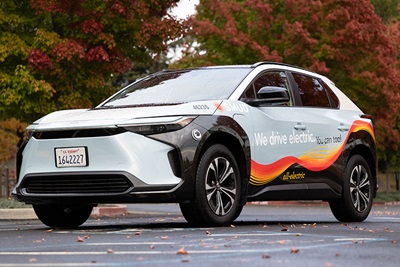
We continue to make strides in emissions reductions and fleet conversion. |
Scope 1 (direct emissions)
- SMUD developed a fleet acquisition policy to prioritize zero emission vehicles and electrification of equipment. We initiated a process to better identify potential opportunities to reduce fleet emissions through actions such as vehicle electrification, renewable diesel and reducing idle time. Our newly installed GPS equipment is helping track miles traveled, fuel consumed and idling times more accurately. This year, we accelerated fleet investment to take advantage of cost-effective upfront incentives.
- SMUD is participating in federal, state and local grant opportunities to maximize fleet electrification funding and programs.
- We’re responding to regulations and making strides in meeting compliance requirements at the state and county level. Beginning in January 2024, 50% of the total number of vehicles (over 8,500 Gross Vehicle Weight) purchased during the year were required to be Zero Emission Vehicles (ZEV), and SMUD met that requirement.
- We continue to make strides in emissions reductions and fleet conversion. In 2024, SMUD’s fleet used 184,518 gallons of renewable fuel. Using alternative fuels has helped meet emissions reductions when the technology for Zero Emissions Vehicles has not been available. We also purchased our first electric vehicle (EV) off road loader for use in the equipment yard.
- SMUD offers a broad range of programs to incentivize employee participation in reducing work trips, cutting commute time and reducing emissions. A partnership with Sacramento Regional Transit District provides employees reduced fare tickets for light rail and bus transportation. To encourage the use of EVs, SMUD offers purchase discounts and workplace charging opportunities. Our van pool program was re-launched in 2023. We also have a carpool program and provide infrastructure (indoor bike storage, showers, and lockers) to support bicycle commuters.
- In 2024, 1,306 of SMUD’s employees participated in remote work agreements for a hybrid office/remote work structure. Annually, SMUD participates in a statewide Clean Air Day challenge with activities, incentive programs and support for reduced vehicle trips, increased bicycle and alternative transportation use and other ways to achieve cleaner air throughout the service area.
Scope 2 (indirect emissions)
- SMUD has a goal to purchase Renewable Energy Credits (RECs) or renewable power (Greenergy) to cover 100% of our operational Scope 2 emissions. We’re doing ongoing research to source additional funding to reach the 100% goal.
Scope 3 (indirect emissions associated with supply chain)
- For the first time, we started the verification process for Scope 3 emissions in 2024. To complete verification, a third party reviews SMUD’s GHG emissions inventory to ensure it is complete, accurate, consistent, transparent, relevant and contains no material misstatements. The verification was completed in 2025. Previously, we’ve only been required to verify Scope 1 and 2 GHG emissions inventory.
To meet our priorities of managing air quality, water and waste, we're improving operational efficiency, minimizing operational impacts and ensuring the short- and long-term quality and quantity of resources.
- SMUD initiated a project to install native, drought-tolerant landscaping in a pilot project on the northwest side of our Headquarters building. The project, which was critical to minimizing water usage, is thriving and is our model for the future.
- While pursuing opportunities to use recycled water on landscaping, we’ve standardized using ultra-low-flow water devices when upgrading landscaping at substations.
- Reducing air emissions through fleet electrification is in direct alignment with the 2030 Zero Carbon Plan. In 2024, we maximized the use of existing zero-emission vehicles in our fleet, which are measured by “zero-emission miles” monthly and annually. More than 70 electric vehicle chargers (for employee and fleet use) were installed in 2024.
- In our first submission for the Electric Vehicle Adoption Leadership program — a Department of Energy workplace certification program recognizing the adoption of clean transportation — SMUD achieved Platinum level certification. Employers in the program are assessed for their efforts toward promoting clean transportation at the workplace and sustainable employee travel.
- In 2016, SMUD began tracking electric fleet miles driven. In the first year, just 2,462 miles were driven. By the close of 2024, we had 174,999 electric fleet miles driven.
- By researching market availability and capitalizing on technological improvements, we achieved 96% electrification of our hand tools in 2024.
- Our wood reel recycle and reuse program continued to grow in 2024 with 215 wood reels reused and respooled with wire. Additionally, 1,602 wood pallets were recycled and reused instead of going to the landfill.
- In 2024, SMUD invested in an asset recovery group with a focus on recycling and reusing leftover materials. We expanded the program from 1 full-time employee to 2 full-time employees to develop appropriate guidelines, policies and procedures while also establishing a tracking system for exempt materials and creating a better tracking and sorting system for the leftover materials.
We are building sustainability into our operations through electrifying our tools and equipment.
  |
|
We’re prioritizing local resources and incorporating sustainability in our purchasing decisions. |
Incorporating sustainability in our purchasing decisions positively impacts our direct and indirect environmental footprint. We’re working toward achieving this by minimizing supply chain impacts, avoiding negative environmental implications throughout the supply chain and prioritizing local resources.
- SMUD completed the annual review process for the Supply Chain Risk Management Framework, which leverages a matrix to identify the most critical materials, services and technologies. We made quarterly mitigation plan updates in 2024 in key areas following the previous year’s review.
- We conducted the annual Sustainable Supply Chain Alliance (SSCA) The Sustainability Project (TSP) survey for suppliers. As one of 100 members with representation from 28 leading utilities, we're part of an effort that diverted 3 billion pounds of material from landfills. The SSCA conducts a Maturity Framework Assessment annually, with SMUD continuing to show strong improvement year over year.
- In 2024, we adopted our Supplier Code of Conduct for all contracts with SMUD. This code of conduct sets expectations for suppliers to adhere to the guidance and policies outlined by SMUD.
 |
|
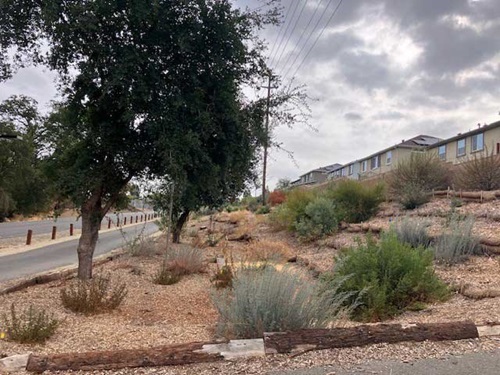
An under-utilized sub-transmission corridor behind an Orangevale neighborhood was transformed into a native pollinator area that’s spurring biodiversity and strengthening ecological habitats in the community. |
We’re committed to sustaining our operations and generating power, despite the obstacles presented by the environments in which we operate. SMUD is committed to avoiding impacts and ensuring the resilience of our surrounding environment.
- SMUD’s Board of Directors added a biodiversity focus into its Strategic Direction 7 – Environmental Leadership (SD-7). SMUD will conduct its business affairs and operations in a sustainable manner by continuously improving pollution prevention, minimizing environmental impacts, including Tribal and other cultural impacts, conserving resources, enhancing regional biodiversity and promoting equity within SMUD’s diverse communities.
- SMUD's final Habitat Conservation Plan application, which covers operations, maintenance and new construction, was published in the Federal Register in December 2023. The final permit was recorded in December 2024. Environmental Services staff successfully acquired mitigation credits for the valley elderberry longhorn beetle, vernal pool fairy shrimp, vernal pool tadpole shrimp, California tiger salamander and the giant garter snake to offset impacts to their habitat over the next 5 years.
- The conservation easement for the Rancho Seco II Solar Project will add an additional 219.57-acre parcel to our mitigation strategy that expands upon our landscape-level protection at Rancho Seco to 1,352 acres. We received approval from the California Department of Fish and Wildlife and U.S. Fish and Wildlife Service for the easement.
- We’re collaborating with the Electric Power Research Institute’s (EPRI) efforts to consider a more cost-efficient monarch butterfly habitat management strategy in response to the U.S. Fish and Wildlife Service’s proposed listing of the monarch butterfly as a threatened species.
- We continued partnering with regulatory agency staff, specialized contractors and academics to demonstrate the impact of integrated vegetation management at the Pine Hill Preserve. This unique community boasts a variety of rare plant species, and our partnership is using data collection, selective herbicide use and removal and management techniques to demonstrate reduced wildfire risk and habitat quality maintenance in an open chaparral landscape.
 |
|
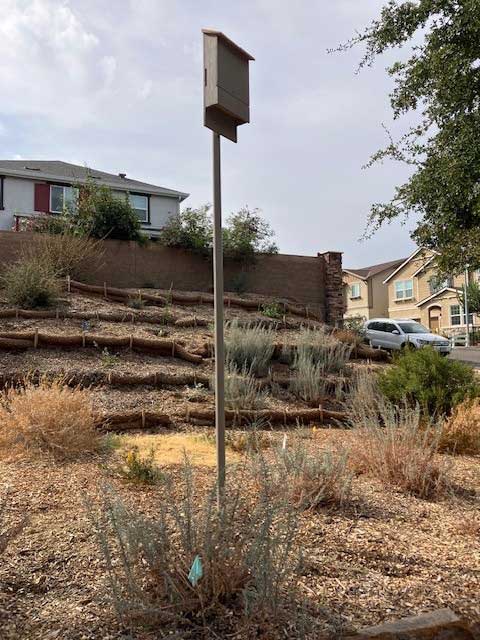
A bat house and an owl box in the garden provide safe shelter for those creatures. |
- We completed the Phase 2 installation of the pollinator garden at the Orangevale substation. SMUD’s carpentry shop reused redwood to create custom benches and planter borders, and multi-language signage was installed. The garden is also being used as a test site for a thick layer of mulch designed by SMUD’s Vegetation Management program with a goal to eliminate unreliable drip irrigation.
- We gave away 10,000 Central Valley Native Seed packets at a variety of our events in 2024. These seeds ensure that even small urban gardens have an impact on pollinator populations.
- SolaBee hives were supported at 5 SMUD locations which were selected based on nearby agriculture properties that would benefit from the bees.
- As part of our collaborative project with the El Dorado Community Services District, we continued creating a bike park and pollinator garden within our easement area. SMUD employees installed the first phase of native plants in the garden.
- Using our 2017 land-based carbon study and additional recent research, we estimated the long-term carbon value associated with SMUD’s land assets. Identifying this value has significant potential to store carbon in soil and biomass, which will support our 2030 Zero Carbon Plan.
- We collaborated with the Country Acres project development team to research and refine the site seed mixes planned for use within the solar arrays and in border areas, selecting species that will help reduce wildfire risk and provide pollinator benefits.
- Development continues on an actionable framework for climate adaptation to use across SMUD. This will focus on 2030 Zero Carbon Plan execution and ensure that we meet industry and market standards. We’re assessing available climate data and tools to support internal decision-making. In 2024, we held the first Climate Adaptation Stakeholder meeting where we requested input on climate-related hazards and identified how the work from this project would support the various stakeholders.
We’re working with partners on a project to restore and improve ecosystem function inside solar projects.
 |
|
A clean energy future is achievable through engagement and a culture of sustainability. |
SMUD's committed to building a culture of sustainability among our employees. Employee engagement is critical, and 100% sustainability awareness training is a baseline goal for creating that culture.
- Continuing our decades-long participation in organizations benefiting the community, SMUD is an active member in environmental organizations such as Valley Vision, Business Environmental Resource Center, Sacramento Transportation Management Association, Capital Region Climate Readiness Collaborative, Sacramento Environmental Commission, Sacramento Clean Cities Coalition and Environmental Council of Sacramento.
- SMUD provided $15,000 to Valley Vision in 2024 to support the Cleaner Air Partnership (CAP). CAP is a collaboration between Breathe California Sacramento Region, the Sacramento Metropolitan Chamber of Commerce and Valley Vision. SMUD has been a member of CAP since 2018, and staff actively participate in its Executive Committee, on the Air Quality Team during the Metro Chamber’s annual Cap-to-Cap federal advocacy program to Washington, D.C. and CAP Quarterly Luncheons.
- By participating in community events such as Earth Day and Clean Air Day, SMUD sends a clear message, to employees and customers alike, that a clean energy future is achievable – and necessary.
- In 2024, SMUD had more than 600 employees participate in California Clean Air Day – pledging to take action to clean the air and better our environment.
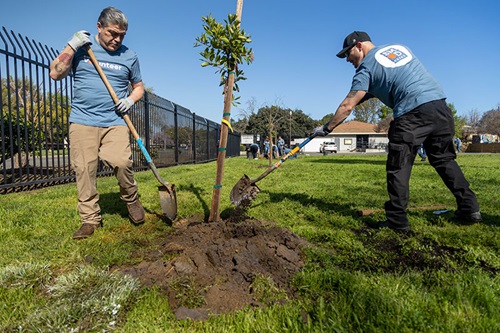
- On Earth Day, our employees took test rides on e-bikes and received information from vendors about transportation alternatives. They also planted 80 native species plants, including live oaks, milkweed and western redbud, on the SMUD Headquarters campus.
- May is Bike Month and we partnered with the 50 Corridor and Sacramento Transportation Management Associations to host a social bicycle ride for employees. We included a bicycle check before the ride and a safety briefing.
- Our internal recognition program supports employee recognition for leadership in environmental sustainability and acknowledges their efforts to reduce SMUD’s environmental footprint in alignment with our 2030 Clean Energy Vision.
Where we're at
We’re advancing toward our goals. Check out our progress.
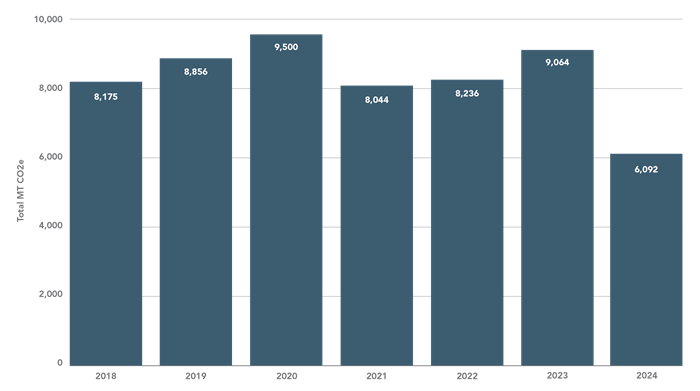
Total metric tonnes of carbon dioxide equivalent by year
SMUD tracks and collects data on emissions from the fuel used in our mobile fleet, electricity consumed at SMUD buildings and any fuel used for comfort heating at Upper American River Project (UARP) facilities. This data reflects a total from both anthropogenic and biogenic emissions (from usage of renewable biodiesel in some fleet vehicles). It also includes estimated emissions savings from employees using rideshare programs.
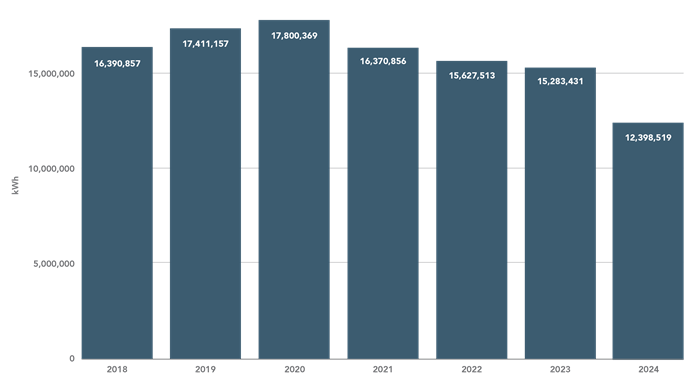
SMUD’s electricity usage by year (kWh)
SMUD collects data on energy used at all SMUD buildings. Total energy used is shown based on metered data. This also takes into account the solar electricity generated at the East Campus Operations Center.
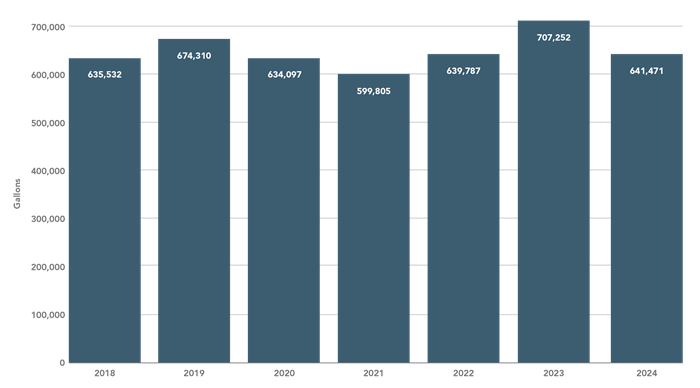
Gallons of fuel purchased by year
In 2024, SMUD’s fuel consumption was reduced by more than 65,000 gallons. SMUD’s fleet of forklifts, heavy construction equipment, trailer mounted generators, boats, cars, trucks and SUVs use fuel obtained on site at our main campuses and the UARP, as well as through fueling stations.
Data is collected, compiled and reported on a quarterly basis. Data collected includes the type of fuel, location, date and vehicle ID.
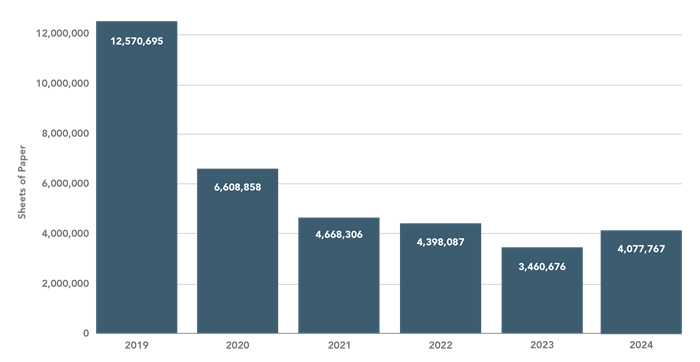
Sheets of paper used by year
We continue to evaluate SMUD’s programs that use printed materials and collaborate within departments on reducing paper usage. We’re doing this by analyzing content, relevancy, design, volume, frequency and end use goals. At SMUD, using email, extending the life of non-confidential materials to use as scratch paper and reducing printing overall is highly encouraged and supported.
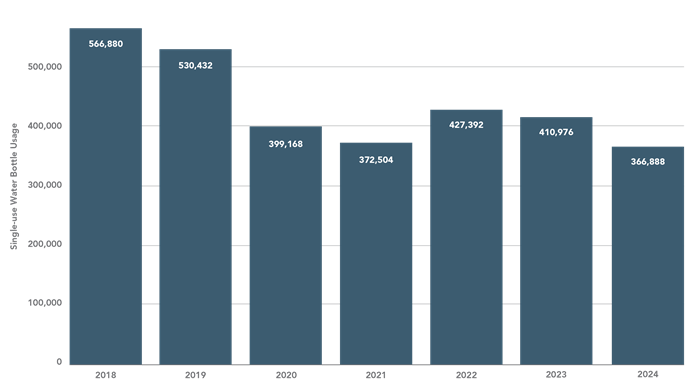
Single-use water bottles used by year
We reduced single-use water bottle consumption by more than 44,000 bottles in 2024. We’re continuing to evaluate options for providing hydration, especially to field staff who typically encounter 100+ degree temperature days July through September. Concerns include health and hygiene, along with durability of any product.
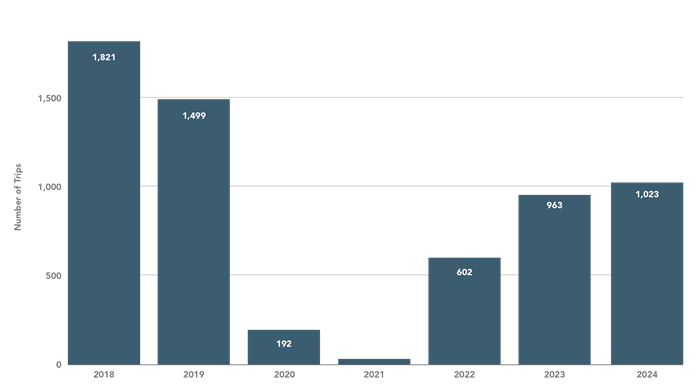
Number of air travel trips
SMUD encourages employees to exercise good judgement in using air travel, considering options for virtual and local meetings first, with particular focus on rideshare and mass transit. Our air travel increase in 2024 was modest, still staying well-below pre-COVID 19 levels.
Waste diversion is the process of diverting waste from landfills. SMUD has focused on keeping materials such as concrete, metal and wood out of the waste stream. Establishing goals has spurred creative thinking and partnerships for material reuse, resulting in cost savings.
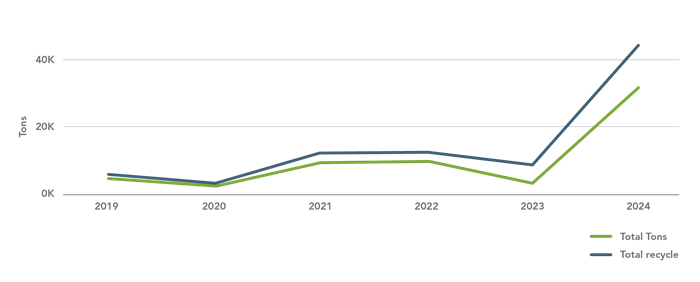
Top recycled materials
 |
 |
 |
 |
|---|---|---|---|
Concrete |
Transformers |
Transformer oil |
Wood |
Greenergy is a program that allows SMUD's residential and commercial customers to elect using renewables from state and local renewable energy sources for a small charge added to their bill. SMUD’s sources for Greenergy are solar, wind and large hydroelectric. As a newer option for Clean PowerCity® Champions, our Greenergy program is poised for growth. Renewable energy sources are key to improving our air quality and creating a better, cleaner environment.
 |
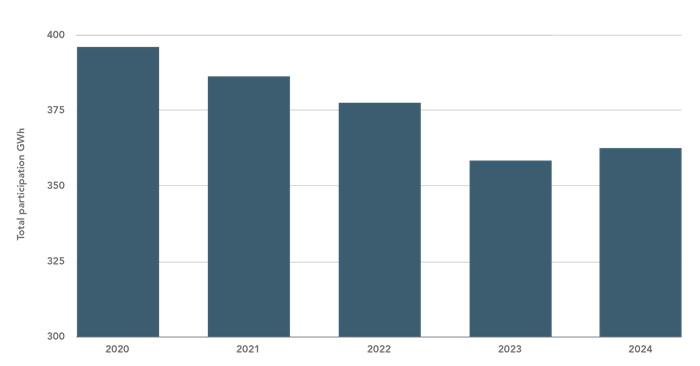
Our energy outlook Get current information on usage, forecasted peak and our renewable energy mix. |
 |
View our progress to a clean energy future Get the latest data on our carbon emissions and customer enrollment in our clean energy programs. |
Investing in our community
 |
|
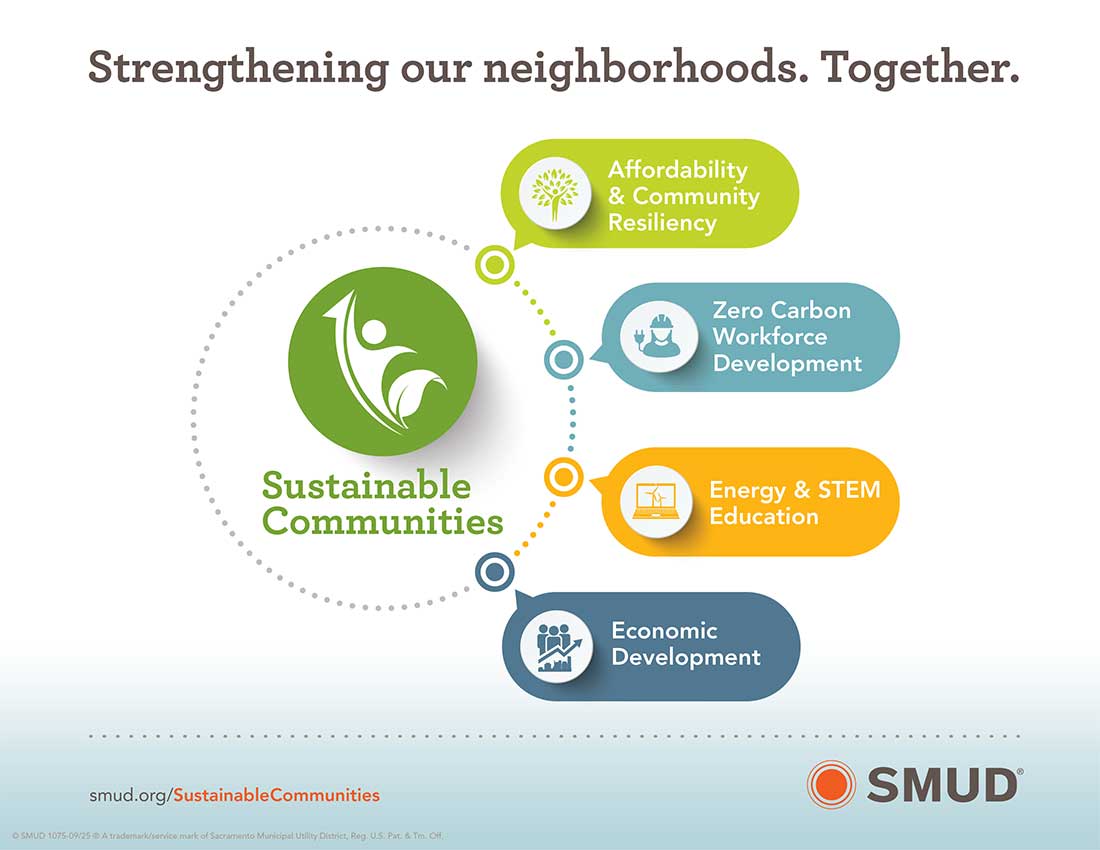
We’re supporting a clean energy future with our Sustainable Communities program. |
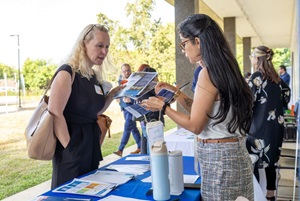
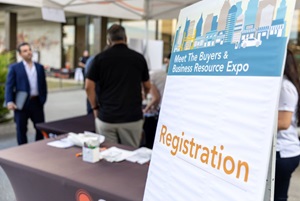
For decades, SMUD’s been committed to strengthening the Sacramento region by fostering community well-being, environmental stewardship and economic opportunity. Through strategic partnerships with local organizations, government agencies and private industry, we work to create lasting impact across diverse neighborhoods. This includes financial support, employee volunteerism and in-kind contributions that amplify community initiatives. From hosting resource expos and sustainability-focused events to leading tree-planting programs and Earth Month activities, we champion projects that enhance quality of life for our customers and community.
Building on this strong foundation, we’ve invested $36.7 million into our Sustainable Communities community-based partnerships and programs supporting access to clean energy solutions, STEM education, regional workforce development and economic opportunities for historically under-resourced communities.
In 2022, we launched our Community Impact Plan (CIP), magnifying our commitment to make meaningful investments in under-resourced communities to ensure their participation in a clean energy future. Since the launch of CIP, we’ve diversified clean energy programs to make them accessible to more residential customers, created equitable pathways to living-wage zero carbon jobs through regional workforce outreach, education and training and focused on investing in the small business community through meaningful and impactful partnerships.
By aligning our Sustainable Communities and CIP efforts with our 2030 Zero Carbon Plan, we’re ensuring that all communities in Sacramento share in the benefits of the clean energy transition, including health benefits from improved air quality, new jobs and resilience to climate change.
In 2024, our Sustainable Communities Resource Priorities Map was updated to include the California Climate Investments Priority Populations 4.0 and Mapping Inequality: Redlining in New Deal America. This fourth iteration of the map will help inform resource allocation, reduce growing economic disparity in Sacramento County and ensure the benefits of our 2030 Zero Carbon Plan are equitably shared among all communities.
Developed in 2019, this resource analyzes current data to identify the local areas most likely to be under-resourced or in distress due to lack of community development, income, housing, employment opportunities, transportation, medical treatment, nutrition, education and clean environment. This map allows SMUD, and our local partners, to analyze how various energy programs and projects can be enhanced or expanded to improve equity, incorporating what community members themselves feel is needed to achieve a more equitable energy future.